
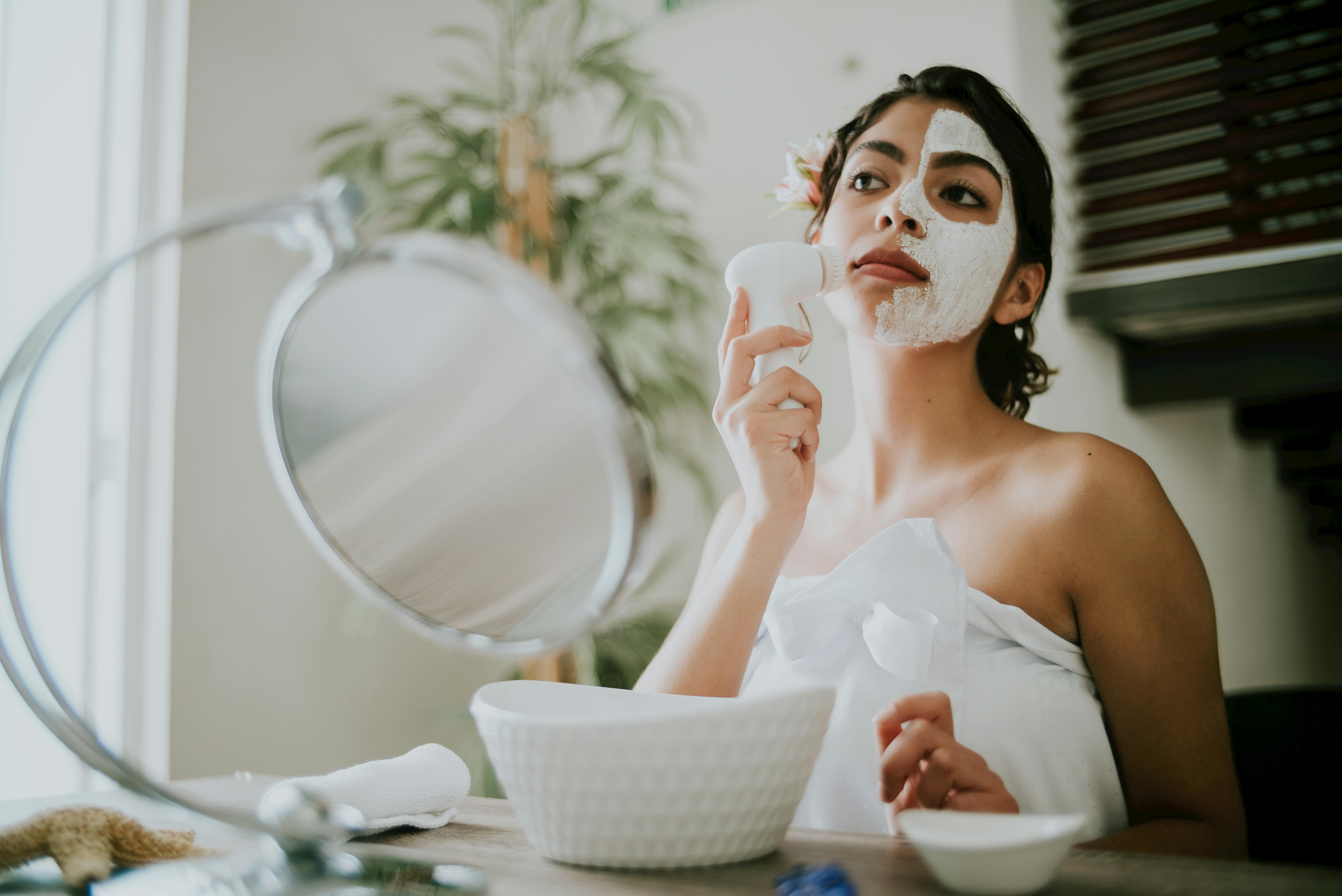
There was a time when achieving a truly deep, clinical-grade pore extraction required an appointment, a commute, and a significant financial commitment. The HydraFacial, with its signature vortex-suction technology and nutrient-rich infusions, became the gold standard for immediate skin clarity. However, as we navigate the landscape of 2026, the walls of the professional clinic are becoming increasingly permeable. A new wave of “HydraFacials in a bottle” and high-tech home devices is democratizing the results once reserved for the aesthetician’s chair. Driven by a mix of economic pragmatism and a sophisticated understanding of acid chemistry, consumers are now recreating the professional sequence—cleanse, extract, hydrate, and protect—within the comfort of their own bathrooms.
The momentum behind this shift is undeniable. According to TikTok Analytics for the first quarter of 2026, #HydraFacial has evolved from a trending service to a foundational skincare category, amassing over 3.2 billion views with a “long” predicted lifespan. While professional treatments remain a luxury aspiration, a growing segment of “review” content is beginning to question the long-term value of a single $250 session compared to a curated at-home ecosystem. This skepticism has opened a massive opportunity for brands to emphasize effective, accessible pore-care solutions that offer cumulative results. The 2026 consumer isn’t just looking for a superficial scrub; they are looking for a systematic approach to pore purification that mirrors the intensity of a clinical procedure.
This transition is deeply tied to the “Lipstick Effect” in the skincare world. Amid global economic uncertainty, shoppers are scaling back on frequent professional appointments but are willing to invest in high-performance, “prestige” home alternatives that deliver a visible return on investment. By focusing on the “ick factor” of pore extractions and the restorative power of multi-weight hydration, the beauty industry has successfully translated the professional experience into a ritualized home practice. The result is a category that balances the aggression of resurfacing with the intelligence of barrier support, proving that professional-grade clarity is no longer an exclusive luxury.
The Chemistry of At Home Resurfacing

The heart of the at-home HydraFacial movement lies in the strategic use of BHA (Beta Hydroxy Acid) and PHA (Polyhydroxy Acid). In professional settings, these acids are often used in high concentrations to break down the “glue” holding dead skin cells together and to dissolve sebum within the pore. For 2026, the innovation lies in “barrier-conscious resurfacing.” Formulators are moving away from harsh, stripping toners in favor of sophisticated blends that provide the same deep-cleansing benefits without the inflammatory trade-off. BHA, specifically salicylic acid, remains the hero for its lipophilic nature, allowing it to penetrate oil-clogged pores and clear out sebaceous filaments at the source.
However, the inclusion of PHA is what defines the 2026 era of pore care. With a larger molecular structure than AHAs or BHAs, PHAs provide a gentler, surface-level exfoliation that doubles as a humectant. This “hydra-exfoliation” mimics the clinic’s ability to peel and hydrate simultaneously. When paired with multi-weight hyaluronic acid—where different molecular weights target different depths of the epidermis—the result is a plump, glassy finish that used to be the exclusive hallmark of a vortex-infusion machine. This dual-action chemistry ensures that even those with sensitive skin can participate in the pore-purification trend without risking long-term barrier damage.
Furthermore, we are seeing the rise of “regenerative support” within these resurfacing formulas. Brands are incorporating peptides and amino acids alongside their acid blends to signal the skin to repair itself the moment exfoliation occurs. This “pro-healing” approach is a direct response to the #SkinHealing and #ScarCare movements, acknowledging that the best way to maintain clear pores is to ensure the surrounding skin tissue is healthy, elastic, and resilient. By treating the pore not just as a hole to be emptied, but as a structural component of the skin to be supported, 2026 products are achieving a level of efficacy that was previously unthinkable outside of a medical environment.
Mirroring the Professional Sequence
To achieve clinic-like results, the modern consumer is no longer applying products in a haphazard fashion. Instead, they are following a disciplined four-step protocol: Cleanse, Extract, Hydrate, and Protect. This sequence is designed to maximize the efficacy of each active while minimizing the risk of irritation. The first step involves an oil-based or gel-to-milk cleanser that breaks down surface debris, followed by a resurfacing mask or toner that utilizes the BHA/PHA chemistry mentioned above. This sets the stage for the most satisfying part of the process—the extraction.
In the clinic, extractions are performed with vacuum suction. At home, this is being replicated through a combination of manual tools and innovative chemical formats. “Bubbly foams” that use oxygenation to lift impurities out of the pore are becoming a staple, as are transparent pore strips designed specifically for sebaceous filaments on the nose and chin. These strips are a far cry from the aggressive versions of the early 2000s; the 2026 versions use hydrocolloid technology and targeted acids to gently pull “gunk” to the surface without tearing the skin. The goal is to provide that “instant win” of seeing the extracted impurities—a visual feedback loop that has proven incredibly powerful on social media.
Following the extraction, the focus shifts immediately to infusion. This is where multi-weight hyaluronic acid and antioxidant-rich serums come into play. Just as the HydraFacial machine “fuses” the skin with nutrients after cleaning it, the at-home routine uses high-potency serums to fill the now-empty pores with moisture and protection. The final step, protection, involves a lightweight barrier cream or a “cica” balm to seal in the hydration and protect the freshly exfoliated skin from environmental stressors. This systematic approach ensures that the results are not just temporary, but contribute to long-term skin health.
| Treatment Phase | Professional Clinic Protocol | 2026 At-Home “Hydra-System” |
|---|---|---|
| Cleanse & Peel | Vortex-Exfoliation + GlySal Peel | PHA/BHA Resurfacing Toners & Cleansing Balms |
| Extract & Hydrate | Automated Vortex-Suction | Hydrocolloid Pore Strips & Oxygenating Bubbly Foams |
| Fuse & Protect | Vortex-Fusion Antiox+ Infusion | Multi-weight Hyaluronic Acid & Peptide Serums |
| Tools & Tech | HydraFacial MD Tower | Handheld Micro-infusion or Suction Devices |
The Sensory Science and the Ick Factor

The success of pore-purification products in 2026 isn’t just about chemistry; it’s about psychology. There is a deep-seated human fascination with the “ick factor”—the visual and tactile evidence of impurities being removed from the body. TikTok content that showcases “pore gunk” or the residue left on a transparent pore strip consistently outperforms traditional “pretty” skincare content. This viral phenomenon has driven a demand for products that provide a sensory experience of cleanliness. If a consumer can see, feel, or hear a product working, they are far more likely to believe in its efficacy.
Brands are leaning into this by creating products with unique textures and “active” sensations. Self-foaming masks that tingle as they oxygenate, or “clay-to-oil” formulas that change color as they absorb sebum, provide the entertainment and “proof” that today’s digital-first consumer craves. This sensory feedback acts as a substitute for the professional’s voice in the clinic, reassuring the user that the process is working. However, the 2026 iteration of this trend is more sophisticated than its predecessors. It moves away from the “pain is gain” mentality, focusing instead on “painless extraction” and “barrier-safe” satisfaction.
The emotional impact of this cannot be overstated. For many consumers, especially those struggling with persistent blackheads or “strawberry skin,” the ability to take control of their pore health at home is empowering. It removes the shame associated with “clogged” skin and replaces it with a proactive, ritualized form of self-care. By acknowledging the psychological reward of a clear pore, brands are moving beyond utility and into the realm of experience. They are selling a feeling of “purity” and “resetting” that is deeply resonant in an increasingly chaotic world.
Synergy Between Devices and Topicals

The final piece of the at-home professional puzzle is the integration of “Wise Tech”—smart skincare gadgets designed to enhance the penetration of topicals. In 2026, we are seeing the rise of “micro-infusion” tools and handheld suction devices that are specifically engineered for home use. One standout example is the Shark FacialPro Glow, which has gained traction for its ability to deliver results comparable to a professional hydrafacial by combining mechanical exfoliation with high-pressure serum delivery. These devices are no longer seen as gimmicks; they are viewed as essential companions to high-performance skincare formulas.
This “tech-plus-topic” synergy is a major driver of the 2026 market. Consumers are increasingly aware that even the best serum can struggle to penetrate the skin barrier effectively. By using ultrasonic vibrations, micro-current, or mild vacuum suction, these tools “open up” the skin to receive the BHA, PHA, and peptides more efficiently. This not only improves the immediate result but also justifies a higher price point for the skincare products themselves. Brands that offer “bundled” solutions—a device paired with a specific serum sequence—are seeing higher customer loyalty and better clinical outcomes.
Furthermore, the data collected by these smart devices is beginning to personalize the at-home experience. Some 2026 tools connect to apps that analyze skin texture and pore congestion, advising the user on whether they need a “deep dive” extraction or a “gentle hydration” session. This level of customization was previously only possible during a consultation with a human aesthetician. By putting this data-driven insight into the consumer’s hands, the industry is creating a more informed and self-sufficient “prosumer” who knows exactly what their skin needs at any given moment.
The Future of Accessible Professionalism
As we look toward the end of 2026, it is clear that the democratization of professional pore care is not a temporary fad, but a structural shift in the beauty industry. The combination of advanced acid chemistry, systematic rituals, sensory marketing, and smart technology has created an environment where “clinic-grade” results are truly achievable at home. This doesn’t mean the professional clinic is obsolete; rather, its role is shifting toward more intensive, invasive treatments, while the “maintenance” and “purification” phases of skincare are being reclaimed by the consumer.
For brands, the strategy is clear: provide the tools, the education, and the formulas that empower the user to be their own aesthetician. This means championing transparency in ingredients, providing clear “how-to” guidance that mimics a professional consultation, and leaning into the visual storytelling that drives engagement on platforms like TikTok. In the 2026 market, value is defined by performance and accessibility. The consumer wants the “glowing, gunk-free” skin of a $250 facial, but they want it on their own terms, in their own time, and at a price that reflects the new reality of “Skinimalism” and value-conscious consumption.
The journey from the clinic to the bathroom is a journey of empowerment. It represents a world where high-performance skincare is no longer a gatekept secret, but a shared, social, and deeply satisfying practice. By focusing on the intersection of science and sensation, the pore-purification category has set a new standard for what at-home skincare can achieve. In 2026, the bathroom mirror is no longer just a place to see our flaws—it’s a place to professionally transform them.