
For decades, the beauty industry operated on a philosophy of erasure. We were taught to hide, blur, and filter away any evidence of life on our skin. But as we move into 2026, a profound shift in consumer psychology is redrawing the map of the skincare market. The focus has moved from superficial perfection to structural integrity. Nowhere is this more evident than in the explosive growth of scar-focused care. What was once a niche category tucked away in the pharmacy aisle is now a multi-billion dollar frontier, driven by a generation of consumers who view their skin healing journeys as a form of radical transparency.
The numbers tell a compelling story of this transition. Data from TikTok Analytics for the early months of 2026 shows that #ScarCare and #SkinHealing have maintained a steady, high-velocity momentum, racking up over 927 million views with a “very long” predicted lifespan. This isn’t just a fleeting viral moment; it is a fundamental change in how we prioritize skin repair. Consumers are no longer looking for a quick fix to cover an acne mark. Instead, they are investing in what experts call the “scar-support system,” a holistic regimen designed to facilitate deep dermal recovery from the inside out.
This movement is underpinned by a rise in “regenerative tweakments”—professional procedures like microneedling, laser resurfacing, and chemical peels that intentionally create micro-trauma to stimulate collagen. As these treatments become mainstream, the demand for high-performance post-procedure skincare has skyrocketed. The bridge between the dermatologist’s office and the bathroom vanity has finally been crossed, bringing medical-grade technology into the hands of the everyday enthusiast.
The Evolution of the Scar Support System

In the current landscape, a single “miracle” cream is no longer enough to satisfy the informed consumer. The 2026 approach involves a coordinated ecosystem of products designed to manage every stage of the wound-healing process. This “scar-support system” integrates barrier-repair moisturizers, specialized serums, and advanced sun protection to ensure that the skin has the optimal environment to rebuild itself. Celebrity estheticians are now advocating for a “layered recovery” strategy, where occlusion meets hydration to prevent the formation of hypertrophic scars before they even begin.
Silicone remains the gold standard in this category, but its application has evolved. While silicone sheets have long been the leading format for post-surgical care, we are seeing a surge in sophisticated liquid silicone gels that incorporate secondary actives. These formulas create a breathable, protective film that mimics the skin’s natural barrier, while simultaneously delivering reparative ingredients like centella asiatica and retinoids. By keeping the scar site hydrated and protected from external stressors, these systems allow the body’s natural inflammatory response to resolve more efficiently, leading to visible changes in texture and tone over months of consistent use.
The strategy for brands in 2026 is to position these products as part of a cohesive journey. TikTok creators are leading the charge by documenting their month-over-month progress with acne scarring and stretch marks. This long-form educational storytelling has normalized the idea that real skin repair takes time. It’s a move away from the “overnight results” marketing of the past toward a more honest, consistency-based narrative that acknowledges the emotional impact of skin trauma. When a consumer buys into a scar-support system, they aren’t just buying a product; they are buying into a commitment to their skin’s long-term resilience.
Biomimetic Regeneration and the Power of PDRN

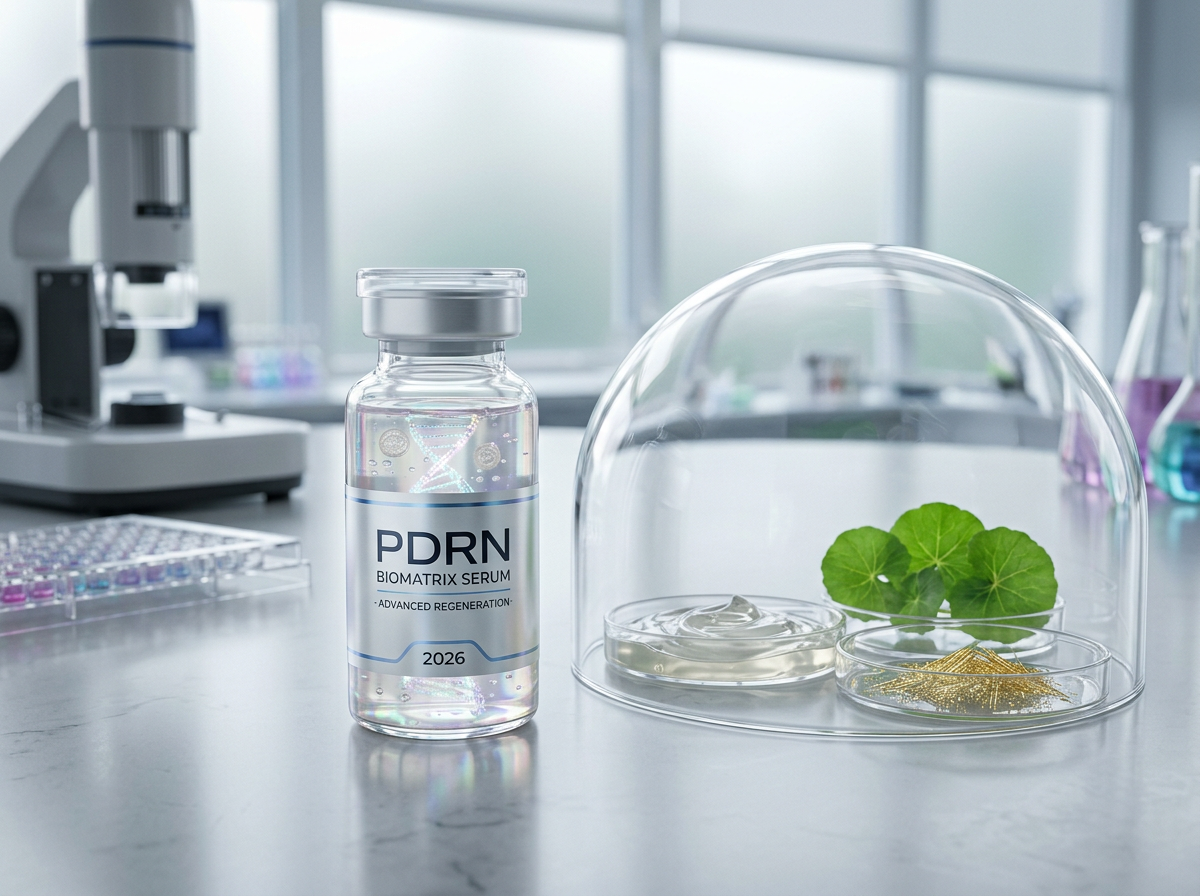
Perhaps the most exciting development in 2026 skincare is the rise of biomimetic formulations—ingredients that are designed to mirror the body’s natural biological processes. Leading this charge is PDRN (Polydeoxyribonucleotide), a DNA-derived molecule traditionally used in clinical settings for tissue repair and wound healing. PDRN works by stimulating cell growth and reducing inflammation at a cellular level, making it an ideal candidate for treating both new and old scars. Its ability to accelerate the production of fibroblasts—the cells responsible for collagen synthesis—marks a transition from “skin care” to “skin regeneration.”
Other mindful aesthetic actives like glutathione and spicules are also finding their way into mainstream scar-care products. Glutathione, a potent antioxidant, helps to manage the post-inflammatory hyperpigmentation (PIH) that often accompanies scarring, while spicules—microscopic needle-like structures derived from sea sponges—act as a natural delivery system to enhance the penetration of these actives. These ingredients are often paired with time-tested favorites like snail mucin and cica to provide a balance of intensive repair and soothing hydration. The goal is to create a formula that is “bio-intelligent,” recognizing the specific needs of damaged tissue and responding with the precise building blocks required for repair.
According to recent clinical briefings, the efficacy of these biomimetic ingredients is significantly enhanced when they are formulated within a bio-compatible lipid matrix. This ensures that the actives are not just sitting on the surface of the stratum corneum but are actually integrating with the skin’s architecture. As consumers become more savvy about ingredient labels, brands that can demonstrate a deep understanding of human biology and cellular communication are the ones gaining the most trust in the #SkinHealing space.
The Impact of Advanced Delivery Systems
A high-performance ingredient is only as good as its ability to reach the target site. In 2026, the conversation around scar care has shifted heavily toward delivery systems. We are seeing a move away from simple emulsions in favor of “supercharged” formats like ampoules, skin boosters, and nanoencapsulation technologies. These systems are designed to protect volatile actives from degradation and ensure deep dermal penetration, which is crucial for treating deep-seated structural issues like atrophic (pitted) acne scars.
Nanoencapsulation, in particular, has revolutionized the application of retinoids and peptides in scar treatment. By wrapping these ingredients in microscopic lipid spheres, brands can deliver higher concentrations of actives with significantly less irritation. This allows for the long-term consistency required for scar remodeling. Furthermore, the use of “skin boosters”—lightweight, high-potency liquids intended to be used under a traditional moisturizer—allows users to customize their routine based on the current state of their skin’s healing process. This modular approach to skincare reflects a broader trend of personalization across the industry.
To better understand how these technological advancements compare to traditional methods, consider the following table which outlines the key shifts in scar care methodology as we head into the second half of the decade.
| Feature | Traditional Scar Care (Pre-2024) | Advanced Structural Regeneration (2026+) |
|---|---|---|
| Core Philosophy | Occlusion and softening of the surface. | Cellular signaling and structural rebuilding. |
| Primary Format | Heavy ointments and basic silicone gels. | Biomimetic serums, ampoules, and spicule-infused creams. |
| Key Ingredients | Vitamin E, cocoa butter, basic silicone. | PDRN, Glutathione, Peptides, and Nano-retinoids. |
| Delivery Mechanism | Passive absorption through the epidermis. | Active delivery via nanoencapsulation and bio-boosters. |
| Consumer Goal | Fading the appearance of redness. | Improving skin density and smoothing textural depth. |
Bridging the Gap Between Professional and Home Care
The democratization of aesthetic technology means that consumers are no longer satisfied with “cosmetic” results. They want “clinical” outcomes. This has led to the emergence of products that act as an at-home extension of professional treatments. Brands are now formulating serums that mimic the effects of “skin boosters” found in clinics, using multi-weight hyaluronic acid and regenerative peptides to provide that sought-after plumpness and smoothness that traditionally required an injection.
This “tweakment serum” category is particularly relevant for scar care because it addresses the loss of volume that often occurs with scarring. By stimulating the extracellular matrix, these products help to “lift” the appearance of depressed scars over time. The marketing for these products has also become more sophisticated, focusing on “bio-optimization” and “dermal resilience.” It is a language that resonates with a demographic that is increasingly comfortable with medical terminology and high-tech solutions. The expectation is clear: if a professional treatment can fix the structure of the skin, the home-care regimen must be capable of maintaining and enhancing those results.
Furthermore, the integration of “Wise Tech”—skincare devices that use microcurrent or LED therapy—has added another layer to the at-home scar-healing routine. These tools work in tandem with topical formulas to boost circulation and enhance cellular ATP production, essentially “powering up” the skin’s internal repair shop. This synergy between hardware and software (the product) is a hallmark of the 2026 beauty market, where technology is seen as an essential partner to chemistry.
The Emotional Narrative and Long Term Consistency
Ultimately, the success of the #ScarCare trend lies in its ability to address the emotional weight of skin imperfections. For many, a scar is not just a mark on the skin; it is a reminder of a struggle, whether with acne, surgery, or an accident. The 2026 beauty landscape acknowledges this by fostering communities of “Skin Healers”—creators and consumers who share their vulnerabilities and their progress. This emotional transparency has moved the needle from shame to empowerment. Brands that lean into this narrative, prioritizing “skin repair priorities” over “perfection,” are finding a loyal and engaged audience.
This shift also emphasizes the importance of long-term consistency. Scar remodeling is a biological process that can take up to two years to complete. By setting realistic expectations and providing the tools for a “very long” lifespan of care, the industry is moving away from the “disposable” nature of past trends. The 2026 consumer understands that their skin is a living, breathing organ that requires ongoing support. They are willing to invest in high-quality, scientifically-backed formulas that offer a path to genuine recovery.
As we look toward the future of the skincare industry, it is clear that the focus on structural health is here to stay. The rise of scar care is a testament to a more mature, informed, and resilient consumer base. By embracing biomimetic ingredients, advanced delivery systems, and a holistic “support system” approach, brands can meet the demand for products that don’t just hide our history, but help us heal from it. In 2026, the most beautiful skin is not the most perfect skin—it is the skin that has the strength to bounce back.